As I write this, the heavens-wanderer we call our home is completing another tireless circuit of Helios, our life-giving star. Or to put it in our modern idiom: a new year is upon us!
As befits this transitional moment, I look back and consider the year for all its successes and failures. My reading volume was shamefully low, and I would be inclined to categorize that as a failure but for the intention I set to become a more thoughtful reader by reading less. I want to be more selective in what I read, and then consume it slowly—like savoring each bite of a rich meal.
To that end, I have made much more progress than a list of books read might convey (except by its diminutive stature). It is this spark of progress I intend to fan into a steady flame over the next year. I invite you to join me in going slow and reading something substantial enough that it improves under the harsh light of our full attention, rather than crumbling to bits and being carried away into an unremembered oblivion like so much chaff in the wind.
This mission, should you choose to accept it, comes to us appointed by the Fates, if I read aright the omens. Have you noticed them? Read the riddle spun out by Fate for yourself:
Of the works of mankind,
I am a pillar strong, a corner-stone;My store is grand, my scale epic,
I come long before ancient Rome;The Muse breathed out verses the bard did sing,
the drama, the actors, on the stage was seen;My story in today’s Golden Bard burns,
a man of plot twists and time turns,
takes up my song on Hollywood’s Silver Screen.
The great work of which I speak? The epic of Homer, The Odyssey. Our modern era’s Golden Bard? Christopher Nolan. In July of 2026, Nolan will share his retelling of the great adventure and misfortune of cunning Odysseus. This is one of the few times we do not commit lexical violence when we say: it’s going to be epic.
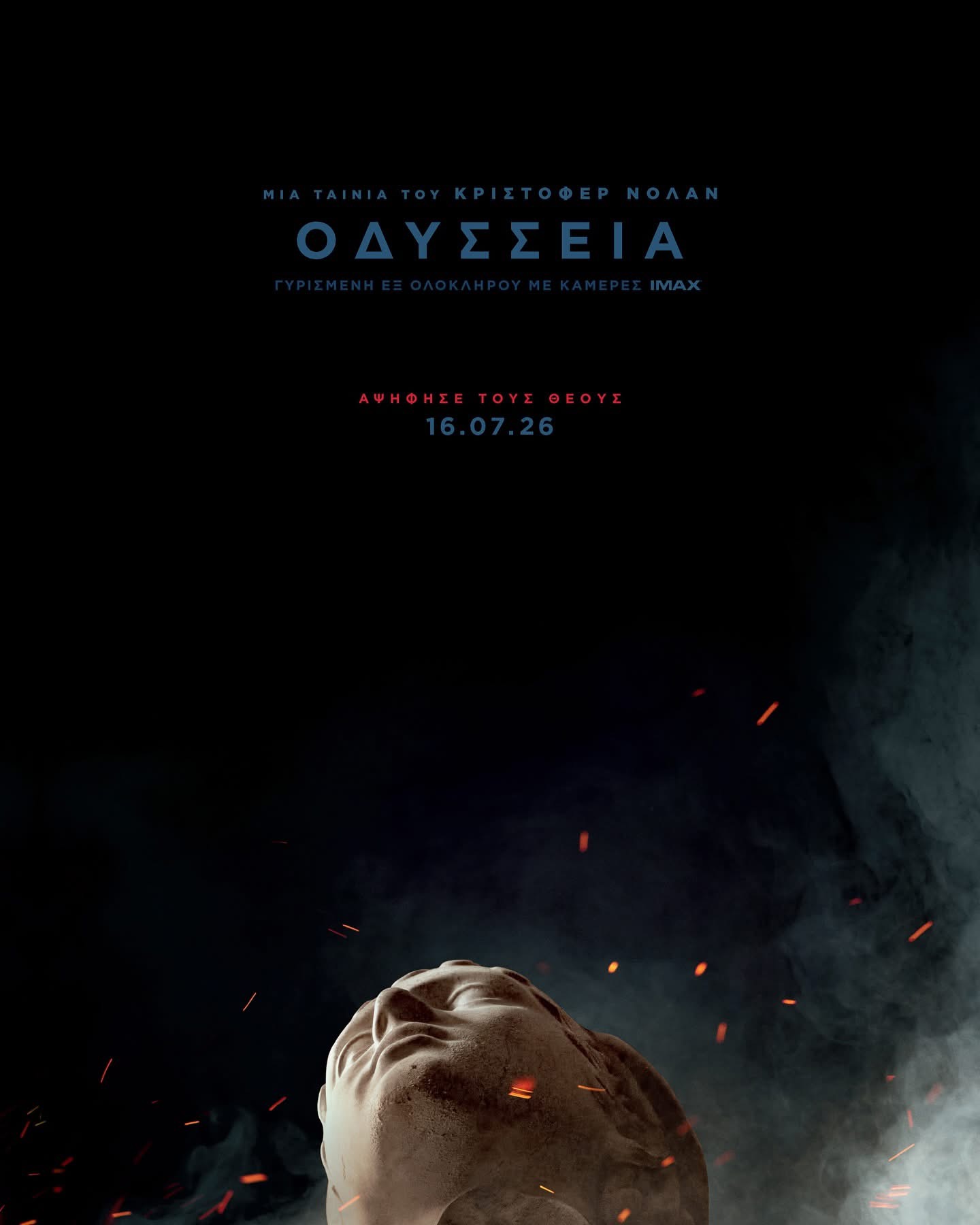 ### The Plan
The works of Homer deserve lengthy study, but I will content myself with spending roughly 6 months reading, reflecting, and discussing this great tale with anyone who cares to listen. It will also prepare us to view the upcoming film with heightened awareness.
The Odyssey is made up of 24 books, which you can think of as chapters (ancient texts tend to enumerate literary sections in the form “Book #”, e.g. the Confessions of St. Augustine). These divisions provide us a helpful set of checkpoints by which we can target a pace. I intend to work through 1 book each week in 2026. If followed exactly, the book could be completed by mid-June, a whole month before the film’s scheduled release. This strikes me as a healthy pace with just the right amount of slack to accommodate delays if things come up and reading grinds to a temporary halt.
I will be reading from the 1996 translation of Robert Fagles. He does not follow any original or adapted metric scheme of the poem, but his translation is widely considered poetic. This seems to mean that his word choices paint a picture and create a mood that is in the spirit of the Greek, but with artistic license. Translations are a domain where strong opinions abound, and I haven’t canvassed Homer’s translations much beyond accrediting Fagles’ place among the great translators, following recommendations from those whose sensibilities I share, and the assessing the availability of reasonably priced, aesthetically pleasing paperback editions and well-narrated audiobooks.
In this edition, the poem itself spans 412 pages, with more than 100 pages of editorial content (introduction, notes on the text, maps, genealogies, glossary, etc.). That comes out to about 17 pages per week, and about 2.5 pages per night. The corresponding audiobook, the version narrated by Sir Ian McKellen, is 13 hours and 3 minutes. In this audio form, the weekly workload is around 30 minutes of listening. Of course, when reading one book at a time, we are at the mercy of that book’s length, but they don’t vary too greatly (apart from books 4, 11, & 19).
It is my goal to publish at least one piece per book. They may take the form of a summary, a foray into the tangents the tale presents unsatisfied, linguistic questions, or general reflection. I hope to add a pronunciation guide to the key names in each book, and compile these into a complete guide to be published at the end. These will draw heavily from the guide in the Fagles edition, but perhaps updated to include a guide to names in the original Greek, IPA spellings, Shavian transliterations (a phonemic English alphabet), and possibly notes quibbling with the pronunciations given in this edition and the general state of how Greek has been passed down to us verses to modern Greeks (as much as I have gathered at least).
So find yourself a copy of The Odyssey and join me!